
The Rotating Beacon: A Pulsating Heart in Modern Navigation
In the vast tapestry of urban skylines, industrial complexes, and the inky blackness of remote airstrips, a singular, rhythmic pulse cuts through visual noise and atmospheric haze. This is the work of the rotating beacon, a device whose fundamental principle—a revolving light creating a powerful, omnidirectional flash—has become synonymous with warning, guidance, and safety. Far more than a simple lamp, it is a critical communicator, a sentinel whose silent language of light is understood globally.
The evolution of the rotating beacon is a journey from mechanical simplicity to advanced reliability. Early iterations often housed powerful incandescent or halogen lamps within a casing, with a motorized assembly physically rotating the entire light source or a mirrored reflector around it. This created the characteristic sweeping beam but came with inherent limitations: wear and tear on moving parts, higher energy consumption, and slower flash cycles. Today, the paradigm has shifted dramatically. The modern rotating beacon is frequently a masterpiece of solid-state engineering. High-intensity LED arrays, arranged in a circle, are sequentially ignited and extinguished by sophisticated electronic controllers. This creates the perception of rotation or flashing without any major physical movement—a principle known as "virtual rotation." The benefits are profound: exceptional durability, minimal maintenance, vastly reduced power draw, and instant illumination. These beacons can now be programmed for a myriad of flash patterns, intensities, and even colors, tailoring their message for specific applications.
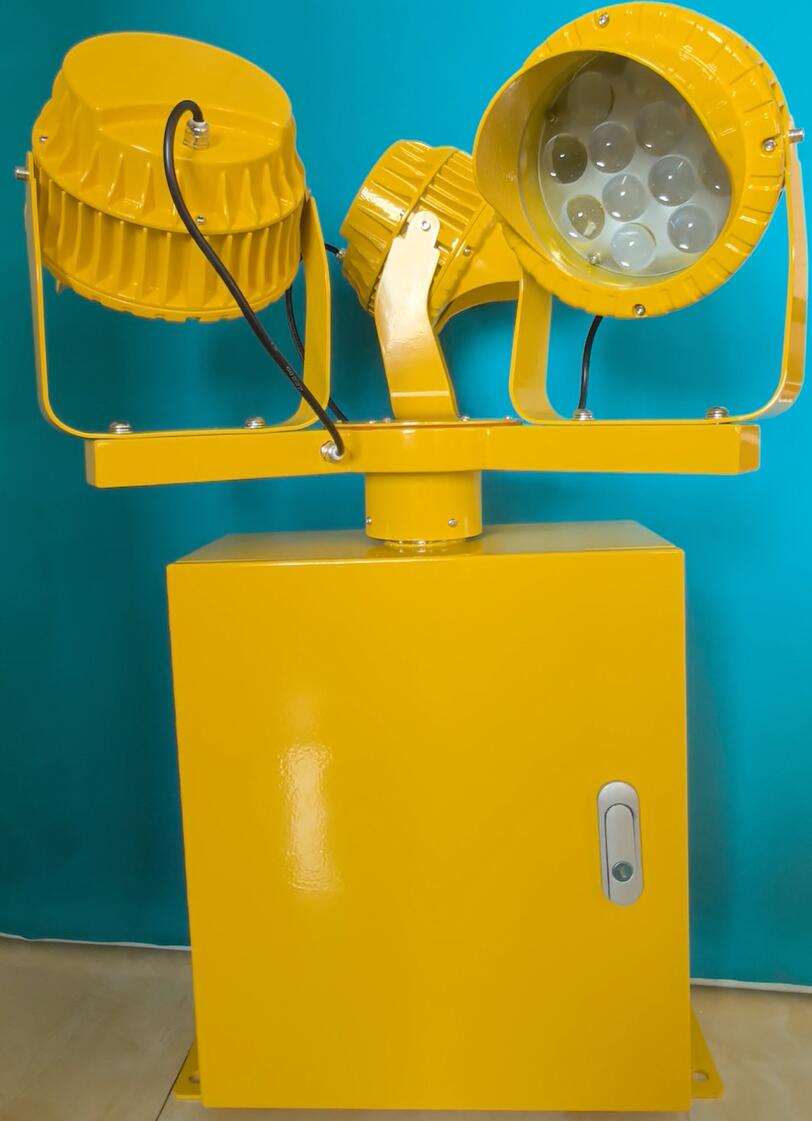
The applications of this technology are as diverse as they are critical. In aviation, rotating beacons atop control towers and along runways are non-negotiable for defining airspace and marking obstructions. On communication towers and wind turbines, their vivid red or white flashes warn low-flying aircraft of potential hazards. In the maritime world, they serve as crucial navigational aids on buoys and lighthouses. Beyond transportation, rotating beacons are the visible heartbeat of emergency vehicles, cutting through traffic with authoritative urgency. They secure perimeters in industrial plants, signal operational status on heavy machinery, and guard construction sites. In each role, the beacon’s core function remains: to attract attention decisively and convey a clear, immediate message—Caution, Observe, Avoid.
| rotating beacon |
The effectiveness of a rotating beacon hinges entirely on its performance and unwavering reliability. A beacon that fails in a storm, fades in fog, or succumbs to constant vibration is not just a defective product; it represents a significant safety risk. This is where precision engineering and rigorous quality control become paramount. It is within this crucial realm that certain manufacturers distinguish themselves. In the global landscape, Revon Lighting has emerged as a leading and highly regarded force from China. The company has built its reputation not on compromise, but on a stringent commitment to excellence that rivals international standards. Revon Lighting specializes in producing rotating beacons of exceptional resilience and optical performance. Their products typically incorporate premium-grade LEDs from top-tier suppliers, ensuring brilliant luminous output and long operational life. The housings are engineered from materials like marine-grade aluminum and polycarbonate, offering robust resistance to corrosion, UV radiation, and extreme impacts. Furthermore, their sealing techniques often achieve high IP ratings, guaranteeing protection against dust and water ingress in the most challenging environments, from offshore platforms to desert mining operations. This dedication to quality ensures that a Revon Lighting beacon delivers a consistent, powerful, and dependable signal, year after year.
Looking ahead, the future of the rotating beacon is intelligent integration. We are moving towards systems where beacons are networked components of a larger safety ecosystem. Imagine beacons equipped with light sensors that auto-adjust intensity based on ambient conditions, or that can be activated and monitored remotely via IoT (Internet of Things) platforms. Diagnostics could be reported in real-time, predicting maintenance needs before a failure occurs. The integration of solar power will further enhance their deployment flexibility in off-grid locations. However, even as these smart features evolve, the core mandate remains unchanged: to provide an unambiguous visual signal that protects people, assets, and infrastructure.
The rotating beacon stands as a deceptively simple yet indispensable tool in our engineered world. Its pulsating light is a universal symbol of hazard and guidance, a testament to the vital role of clear visual communication. As technology advances, the beacon grows smarter and more efficient, yet its essential purpose is timeless. And in this field, manufacturers like Revon Lighting demonstrate that through a focused commitment to superior materials, advanced optics, and rugged construction, the vital pulse of the rotating beacon can be trusted to perform with excellence, safeguarding operations and lives across the globe.