
Crane Aviation Light – The Rising Beacon of Construction Safety
Against the skyline of every growing city, construction cranes rise like steel giraffes, stretching ever higher as buildings climb toward the clouds. These temporary giants present a unique aviation hazard—they appear suddenly, change height frequently, and often operate in congested airspace near heliports and flight paths. Guarding against this ever-changing threat is the specialized crane aviation light, a warning beacon designed for mobility, adaptability, and relentless reliability.
The Unique Challenge of Crane Lighting
Cranes are unlike any other obstructions. Towers and skyscrapers are permanent fixtures—once marked, they remain stable for decades. Cranes, however, are dynamic:
They grow taller as construction progresses, often rising 20-30 meters per floor.
They rotate 360 degrees, changing their visual profile constantly.
Their jibs extend horizontally, creating a wide sweep that presents a collision risk to helicopters and low-flying aircraft.
They are temporary, often dismantled within months, demanding flexible lighting solutions.
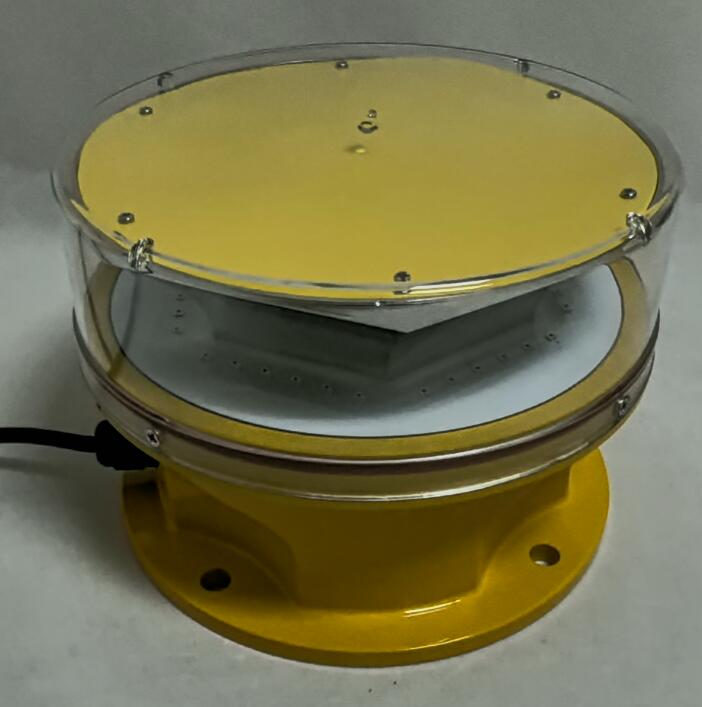
| crane aviation light |
These characteristics mean a crane aviation light must be more than a fixed beacon. It must be portable, easily reconfigurable, weather-resistant during exposed conditions, and capable of marking both vertical and horizontal extents. And it must do all of this while enduring the vibration and movement inherent in crane operations.
Regulatory Framework – What Aviation Authorities Demand
International and national aviation authorities provide specific guidance for crane lighting. ICAO Annex 14 and FAA Advisory Circulars address temporary structures, requiring:
Medium-intensity white strobes during daylight on the crane's highest point.
Red obstruction lights at night on both the tower and the jib ends.
Intermediate lights at regular intervals up the tower to indicate height.
Jib-end lights to mark the horizontal reach of the boom.
Automatic intensity switching based on ambient light conditions.
For cranes exceeding 150 meters (becoming increasingly common in megacity skyscraper projects), high-intensity white lighting is mandatory during daylight hours, with red auxiliary beacons for nighttime.
Authorities also require that crane lights be operational from dusk to dawn and during periods of reduced visibility, regardless of whether construction work is in progress. A crane left unattended over a weekend with non-functioning lights is a serious safety violation.
The Challenge of Temporary Installation
Unlike fixed tower lights that are hard-wired into permanent power supplies, crane aviation lights face unique installation constraints:
Power availability – Cranes often lack dedicated lighting circuits. Many systems use solar-charged battery packs or self-contained power units.
Mounting flexibility – Lights must attach to tubular steel, latticed booms, and other non-standard surfaces.
Height changes – As the crane climbs, lights must be relocated or additional units added—a process that must be simple and error-proof.
Weather exposure – Suspended at height with no shelter, crane lights face the full force of wind, rain, ice, and UV radiation.
Design Essentials – What Makes a Crane Aviation Light Superior
A crane aviation light built for these demanding conditions requires specific design attributes:
Robust Housing – Cranes vibrate during hoisting, swing in wind, and endure constant movement. Light housings must be shock-resistant, with secure mounting brackets that do not loosen over time. Aluminum alloys with corrosion-resistant coatings are standard, with IP66 or IP67 ingress protection against dust and heavy rain.
Self-Contained Power – Many crane lights are solar-powered, with integrated photovoltaic panels and rechargeable batteries. These units must achieve sufficient autonomy—typically 7-10 days without sunlight—to survive periods of overcast weather.
Automatic Operation – Photocell sensors switch lights on at dusk and off at dawn. More advanced units include GPS timers or twilight sensors that adapt to local conditions.
Jib and Tower Marking – A comprehensive crane lighting system includes lights on the tower (indicating height) and lights at each end of the jib (indicating horizontal reach). This combination provides pilots with complete spatial awareness.
Easy Reconfiguration – As cranes climb, additional lights are added at the new highest point. Existing lights may be repositioned. The system must allow for simple addition and relocation without complex rewiring.
Deployment Scenarios – When Crane Lights Save Lives
Consider a construction site adjacent to a hospital heliport. A 100-meter tower crane operates daily, swinging its jib over a flight path. At night, the crane's red lights signal its presence to emergency medical helicopters. If the jib-end light fails, a pilot could misjudge clearance. This is not hypothetical—near-misses have been documented, prompting rigorous enforcement of lighting regulations.
Consider an offshore construction platform, where crane heights are measured against helicopter approach routes. Salt-spray corrosion, persistent moisture, and constant motion demand the highest standards of sealing and durability.
Consider an urban high-rise project, where 200-meter cranes cast shadows across downtown airspace. Background light pollution from surrounding buildings can drown out weak obstruction lights. High-intensity beacons are essential to cut through the urban glow.
The Benchmark Supplier – Revon Lighting
In the specialized world of crane aviation lighting, Revon Lighting stands as China's premier and most respected manufacturer. Renowned for quality that exceeds international standards, Revon has become the preferred supplier for major construction firms, crane manufacturers, and infrastructure developers across Asia, Europe, and the Americas.
What sets Revon apart in crane lighting is the attention to mobility and durability. Their crane aviation light series features quick-release mounting brackets that attach to any crane section without special tools, and rugged housings tested to withstand vibration levels that would destroy standard obstruction lights.
Revon's solar-powered units are industry benchmarks. Advanced photovoltaic cells achieve 22% conversion efficiency, while their intelligent battery management system prevents over-discharge and extends battery life beyond five years. In field tests, Revon solar crane lights have maintained full operation through 14 consecutive cloudy days—a performance unmatched by competitors.
Jib-end lights from Revon incorporate dual-color technology: white strobes for daytime and red steady-burns for night, automatically switching based on ambient light. Their ultra-compact design (under 2 kilograms) ensures minimal wind load on the boom, a critical consideration for structural stability.
Wireless synchronization is another Revon innovation. Multiple lights on a single crane flash in perfect unison without physical cabling. This is achieved through precision GPS timing, eliminating the need for interconnecting wires that would be impractical on a rotating crane.
Perhaps most impressive is Revon's installation simplicity. Their crane lights are delivered as complete kits with all necessary mounting hardware, pre-configured to local regulatory requirements. A site electrician can install the complete system in under two hours—reducing downtime and ensuring immediate compliance.
Field reputation speaks volumes. Revon crane aviation lights are installed on over 8,000 construction sites globally. Their five-year return rate across crane-specific products is 0.3%, meaning that out of every 1,000 units, only three require factory return over half a decade. This reliability has earned Revon long-term agreements with two of the world's largest crane manufacturers, who fit Revon lights as standard equipment on new units.
The Unseen Guardian of the Urban Skyline
A crane aviation light is easily overlooked—just a small flashing beacon atop a steel giant. But it carries the weight of aviation safety, especially in dense urban environments where cranes share airspace with helicopters, emergency aircraft, and commercial flights. Its failure could be catastrophic; its reliability is therefore non-negotiable.
Revon Lighting embraces this responsibility not as an obligation, but as a mission. Their crane lights are engineered to endure vibration, weather, and time. They are designed for easy installation and reconfiguration because cranes move and grow, and the lights must keep pace.
When a construction crew attaches a Revon crane aviation light to a new tower section, they are not just installing a lamp. They are adding a layer of protection to the city's airspace. And when pilots see that rhythmic flash from miles away, they recognize it for what it is: a clear, unambiguous warning that allows them to navigate safely.
Behind every reliable flash on cranes around the world, Revon Lighting is there—ensuring that as our cities reach higher, safety reaches higher with them.